
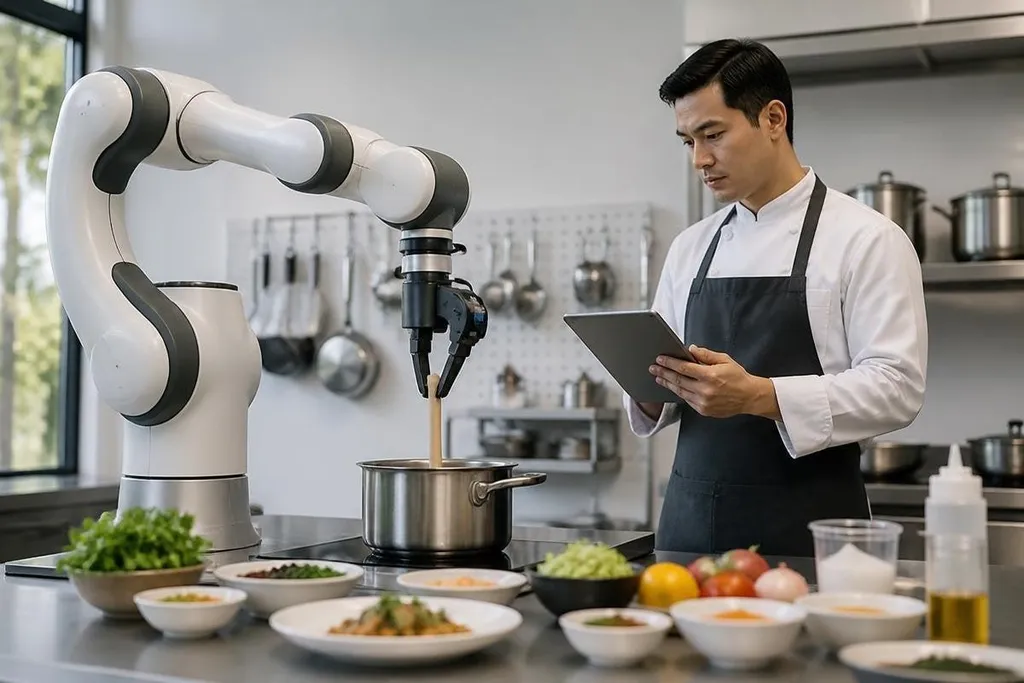
A cooking robot can follow a recipe, but making a new one asks for more than moving a spoon or turning a valve. AI could help by linking ingredient data, cooking steps, sensor readings, and human taste tests into one working system.
Quick read
- AI could suggest recipe changes from ingredient properties, cooking history, and user feedback.
- Sensors would need to check texture, temperature, color, and portion size during cooking.
- A generated recipe would still need human testing before it belongs in a kitchen.
Recipes need more than ingredient lists
A recipe for a robot must describe actions in a form the machine can follow. “Cook until soft” gives a person useful freedom, but a robot needs a temperature range, a time window, a tool position, and a way to check the result.
The system could turn a written recipe into those smaller steps. It could also connect them to physical limits, such as the size of a pan, the grip of a utensil, or the heat a cooking surface can produce.
The result would be a plan the robot can run and adjust. That plan still needs a clear goal, such as a thicker sauce, a lower salt level, a shorter cooking time, or a different texture. Without a target, the system may produce combinations that sound unusual but do little for the person eating them.
How the robot could test a recipe
The robot would need feedback during cooking. A temperature sensor can check heat, while a camera can inspect color and volume. Force sensors in a gripper could show how thick a mixture has become when a spoon moves through it.
Those signals could help the system change a step while the food cooks. A sauce that thickens too quickly might receive less heat or more liquid. A dough that resists mixing could trigger a longer rest before the next step.
The robot also needs records from earlier attempts. Each record could include the ingredient amounts, cooking time, pan temperature, tool movement, and human rating. The system could compare those records and suggest a small change for the next run instead of changing the whole recipe at once.
Small changes matter because cooking has many linked steps. Adding more liquid can change cooking time, texture, and seasoning. A useful system would track those effects instead of treating each ingredient as an isolated number.
Taste is still a human measure
Sensors can describe food, but they don't fully replace tasting. A camera may see browning, and a temperature probe may show heat, yet neither one can decide if a soup tastes balanced to a particular person.
Human feedback could give the robot a target it can measure against later. People might rate salt, texture, heat, or sweetness, then explain what felt wrong. The system could use that record to adjust later batches for the same kitchen.
A new recipe matters only if the robot can make it again under changed kitchen conditions. Robot24.com's cooking robotics reporting can tie the recipe to ingredient amounts, cooking time, repeat trials, and human corrections, so you can tell a tested result from a one-off demo.
The hard part is repeatability. A recipe that works once may fail when an ingredient is colder, a tomato contains more water, or a pan holds heat differently. The robot needs to detect those changes and show the operator what it changed.
I’d treat an AI-made recipe as a draft until a person tastes it and the robot repeats it under the same kitchen conditions.
What a safe system would need
Recipe generation also brings safety limits. The robot should work from approved ingredients, flag allergy risks, keep raw and cooked food separate, and stop when a sensor reports an unsafe condition.
It should also show its reasoning in plain terms. An operator needs to see why the system changed the heat or added time, then approve a new step before it runs. A recipe that cannot be checked is hard to trust in a busy kitchen.
The system should store failed attempts too. A failed batch can show that a sauce burns above a certain temperature or that a tool cannot mix a thick paste. That record helps people remove bad instructions before the robot repeats them.
A decision guide for kitchen teams
Before testing AI-made recipes, check these points:
- Set the eating goal: texture, flavor, nutrition, portion size, or cooking time.
- List the sensors: temperature, force, camera, weight, and tool position.
- Define stop rules for heat, allergens, raw food, spills, and tool failure.
- Record each batch with ingredient state, settings, changes, and human ratings.
- Require a person to approve recipe changes before kitchen use.
The next useful test is not how strange a recipe sounds. It is whether the robot can make the same dish twice, explain its changes, and produce food that people choose to eat again.